Essential Ukraine is the bi-monthly flagship publication of Minority Report hosted by R.Politik, offering in-depth analysis of Ukraine's internal political landscape, institutions, and societal transformations. Unlike other services, Essential Ukraine prioritizes depth and realism over frequency, focusing on the structural and societal changes influenced by the ongoing war.
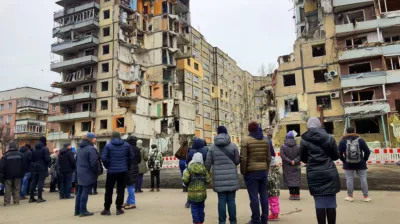
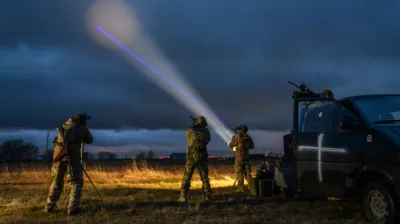
Essential Ukraine #31 examines the growing contradiction between Ukraine’s improving military performance and its deteriorating strategic position. While Ukrainian forces have regained tactical initiative in several sectors, Russia’s infrastructure campaign is eroding the country’s economic resilience. Ukrainian society is turning decisively towards negotiations, while Zelensky faces mounting pressures from Washington, Brussels and competing domestic interests. The diesel deal suggest that Washington is willing to advance agreements with Moscow without waiting for a comprehensive settlement in Ukraine. Europe, meanwhile, faces difficult choices over financing, reforms and its own diplomatic role. The base scenario remains continued military and economic pressure through winter before serious negotiations become possible in spring 2027.
Ukraine may be able to hold the front while losing the economic capacity to sustain its resistance. In this analysis for Carnegie Politika, Balázs Jarábik looks at how Russia’s expanding infrastructure campaign is targeting not only Ukraine’s energy system, but also its industrial production, logistics, transport networks and tax base. The numbers reveal the scale of the challenge. Ukraine’s draft 2027 budget allocates nearly 44% of GDP to security and defense, while its deficit is projected at 15% of GDP. The EU will need to mobilize at least €70 billion in additional funding for 2027 alone as Russian strikes undermine the economic assumptions underlying Kyiv’s budget. This creates a difficult political dilemma. Ukraine needs more European assistance, but Brussels is demanding anti-corruption safeguards and fiscal reforms that could constrain Zelensky’s centralized political system. Europe must balance the risks of weakening reform conditionality against those of withholding essential financing. The strategic challenge is to preserve the functioning economy and state that make continued resistance possible.


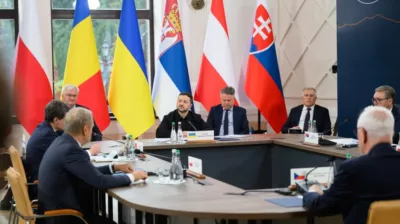
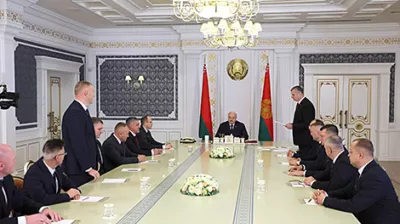
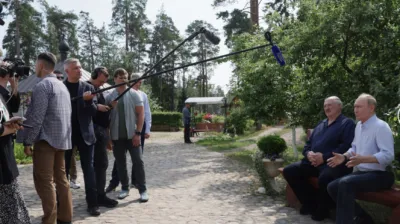
Trump’s promised “massive deal” for Belarusian potash has attracted attention, but for Minsk the real prize is not selling fertilizer to America. Belarus wants to reopen Western transit routes, reduce its growing dependence on Russian infrastructure and recover some of the strategic room for maneuver it has lost since 2022.
Balázs Jarábik argues that this opening is driven as much by security as economics. Minsk sees the war in Ukraine as a strategic impasse and doubts Russia’s ability to protect Belarus in a wider regional confrontation. Its response is a three-track hedge: remaining under Russia’s nuclear umbrella, expanding security ties with China, and cautiously reopening channels with the West. None of this amounts to geopolitical realignment; Belarus remains closely allied with Moscow.
The obstacle is that Washington can lift U.S. restrictions, but it cannot by itself reopen Lithuanian potash transit, European airspace or normal banking relations. The real test of the U.S.–Belarus opening is whether limited economic engagement can strengthen Belarusian sovereignty without becoming political legitimization of Lukashenko’s rule.
Ukraine’s political system is becoming more fragmented and more competitive. In this analysis (in German) Balázs Jarábik examines the struggle unfolding beneath the formal unity of the war effort, as anti-corruption agencies, security institutions, political networks and competing centres of power increasingly fight not only over authority and resources, but over their own survival.
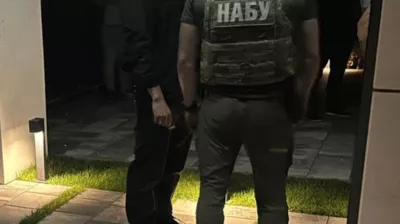
Zelensky has reconsolidated formal control over the government, but not over the wider wartime state. NABU and SAPO have emerged as an unusually potent political force, possessing what Ukraine’s conventional opposition largely lacks: access to sensitive information, investigative powers capable of disrupting elite networks, and the willingness to bring evidence directly into the public arena.
Russia’s war continues to impose a powerful constraint on these conflicts, keeping outright destabilisation unlikely for now. But the underlying struggles will not disappear with a ceasefire. They may intensify as wartime cohesion weakens, making Ukraine’s internal political stability - and Europe’s preparation for the post-war transition - an important part of the wider security challenge.
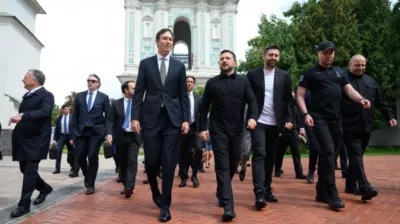
How does Ukraine continue to function after more than four years of full-scale war? In the first analysis of a new series for Europe’s Futures, Balázs Jarábik argues that the answer lies less in institutional strength than in the society's capacity for adaptation.
Ukraine’s resilience is rooted in what Jarábik calls “resilient disorder”: a decentralized and often improvised system in which the state, local authorities, businesses, volunteers and society continuously compensate for institutional weaknesses and respond to new shocks. The same characteristics that can make Ukraine appear chaotic have repeatedly enabled it to absorb disruption without systemic collapse.
Yet resilience has costs and limits. As permanent emergency becomes normalized, demographic decline, manpower shortages, economic dependence, political centralization and societal exhaustion accumulate beneath the surface. The question central to Ukraine’s future is: can a system extraordinarily effective at surviving crisis eventually make the transition from resilience to sustainable governance?
In his latest analysis for the Carnegie Endowment, Balázs Jarábik examines Ukraine’s sweeping government and security reshuffle as preparation for a longer war. The dismissal of Defense Minister Mykhailo Fedorov - and, following public backlash, commander-in-chief Oleksandr Syrskyi - exposed the deeper dilemma. Fedorov offered an attractive vision in which drones, technology, professionalization and reform could compensate for Russia’s structural advantages. But technological success has not resolved Ukraine’s manpower shortages and growing resistance to coercive mobilization. Jarábik concludes that Zelensky ultimately sided neither with the reform camp nor the military establishment, but with political control. The reshuffle reaffirms a principle of his governance: no institution or individual, regardless of popularity or achievements, can be allowed to develop into an independent center of political authority.
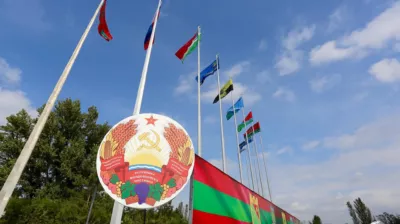
In his latest Moldova analysis for the Carnegie Endowment, Balázs Jarábik argues that the country’s governing PAS party is confronting a new challenge: governing effectively. A succession of corruption scandals, Prime Minister Alexandru Munteanu’s resignation, a failed fiscal reform, and unresolved tensions around Transnistria and Gagauzia have exposed the limits of a centralized governing model. Yet these problems do not amount to a return to Moldova’s oligarchic past: independent media are uncovering wrongdoing, officials are resigning, and European integration remains the country’s dominant strategic project. The deeper challenge is that geopolitics can no longer compensate indefinitely for weaknesses in policymaking, institutional coordination and political inclusion. Having successfully navigated successive crises and secured Moldova’s European course, PAS must return to the promise that originally brought it to power: building a capable and accountable state. Whether it succeeds may ultimately matter more for Moldova’s European future than the speed of accession negotiations.

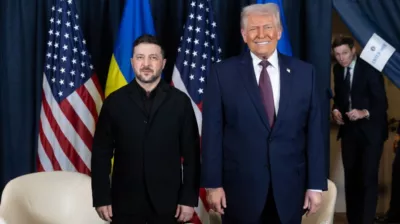
In this analysis for the Carnegie Endowment, Balázs Jarábik analyzes an underappreciated consequence of the war: Ukraine is emerging as a regional military and political power increasingly willing to use its new capabilities to shape the behavior of its neighbors. Belarus provides the clearest test. Kyiv long sought to avoid pushing Alexander Lukashenko further into Moscow’s embrace, but that restraint is giving way to a more assertive approach as Russian-Belarusian military integration deepens and Washington opens its own channel to Minsk. Ukraine’s threat to strike infrastructure supporting Russian drone operations demonstrated both its growing reach and Belarus’s vulnerability. Jarábik argues that this emerging regional posture extends beyond Belarus to Ukraine’s increasingly assertive relations with Poland and Hungary. The longer-term question is how Ukraine emerges from the war - and how its neighbors adjust.

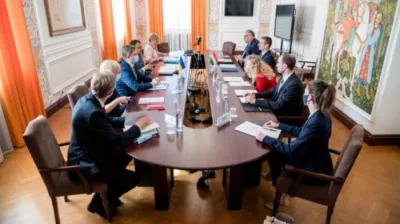
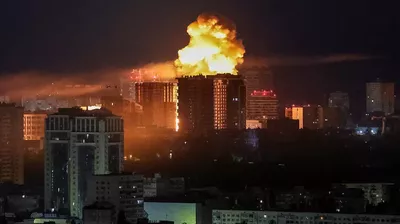
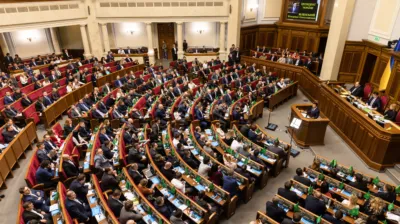
In a new analysis for the Carnegie Endowment, Balázs Jarábik examines how Ukraine’s “muddy politics” - and the Verkhovna Rada - are re-emerging under wartime conditions. He argues that this is not a full fledge political crisis, but another phase of adaptation.
Power is shifting away from Yermak’s centralized management toward a more transactional system, albeit still under presidential oversight. Expectations also are adjusting from a near-term settlement and elections to the likelihood of a longer war. The result is a political environment that is more fragmented and less predictable, yet still capable of delivering key decisions when required.
A Slovak version of the analysis was published here.
In a new analytical series for the Carnegie Endowment’s Russia Eurasia Center, Balázs Jarábik examines first how Ukraine is beginning to prepare for future elections despite the ongoing war. He argues that while elections remain formally postponed, political actors are already positioning themselves, and informal competition is re-emerging beneath the surface of wartime unity. Jarábik highlights that the key challenge is not only logistical but political: how to reconcile democratic processes with security realities and societal fatigue. The analysis suggests that governance, legitimacy, and political competition will more shape the country’s trajectory than the otherwise stabilizing battlefield.

In an analysis for IPS Journal, Balázs Jarábik looks at Ukraine’s latest government reshuffle as a response to mounting wartime and political pressures. He argues that personnel changes reflect the leadership’s effort to manage political, economic, and social strains while maintaining continuity at the core of power. Jarábik highlights that reshuffles – dismissing Andriy Yermak and appointing Kyrylo Budanov as head of the Office of the President - signaling responsiveness without fundamentally altering the system. While they may temporarily ease tensions, they do little to address deeper institutional challenges. The result is a pattern of adaptive governance, where stability is preserved, but underlying pressures continue to accumulate. A Slovak edition of the analysis available here.
In another signature, long paper for the Carnegie Endowment, Balázs Jarábik with Maria Levonova examines how Russia’s full-scale invasion is reshaping Ukraine’s internal geography. The authors argue that the war is accelerating deep regional realignments - demographic, economic, and political - that define not only wartime governance but also postwar reconstruction. The analysis highlights the shift of economic activity and population toward the west and center of the country, alongside the growing role of regional authorities and new administrative dynamics. These changes are not temporary disruptions but structural transformations, likely to persist beyond the war. Thus, the reconstruction effort will not restore the pre-war status quo but will instead consolidate a reconfigured Ukraine with new regional balances and priorities.
Following a previous analysis about the prospects of engagement, Balázs Jarábik - after trips to Minsk - explores the limits of pragmatic dialogue as well as evolving political landscape in Belarus. He argues that while the regime maintains firm control through repression, avoiding being directly engaged into the war, but society’s dynamics have not disappeared. Belarus is in the a phase of managed stagnation, where the system has adapted to endure. Societal undercurrents and elite recalibrations continue to shape the country’s trajectory, even in the absence of open political competition. The result is a political environment that appears static but under current is fluid, with long-term implications for both domestic stability and external engagement.
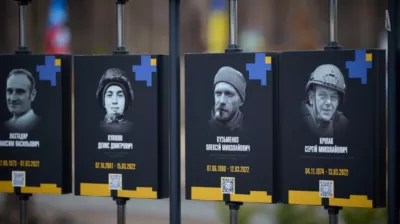
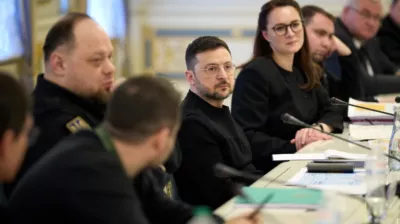
In a signature, long paper for the Carnegie Endowment, Balázs Jarábik and Anatol Oktisyuk writes about gradual re-emergence of Ukraine’s domestic politics as a key battlefield alongside the war itself. While wartime unity has largely held, underlying political competition, institutional tensions, and elite rivalries are beginning to resurface.
The paper highlights that this “unfreezing” of politics reflects both the strain of prolonged war and the anticipation of a post-war transition. As decision-making becomes more contested and informal power centers evolve, Ukraine faces the challenge of maintaining cohesion while accommodating renewed political pluralism. The analysis underscores that managing this internal dynamic will be as critical as developments on the front line.
Balázs Jarábik recently visited Moldova ahead of its crucial parliamentary elections. The country is experiencing growing political polarization: the government, led by the PAS party, retains strong EU backing, while the newly formed Patriotic Bloc is gaining ground by tapping into social discontent—and Russian money. The political center is hollowing out, echoing last year’s presidential race, and with 40% of voters still undecided, the outcome remains uncertain. His backgrounder, explaining why Moldova matters as Ukraine’s soft underbelly and what these dynamics mean for the country’s domestic stability and EU trajectory, was published by the Carnegie Endowment for International Peace.
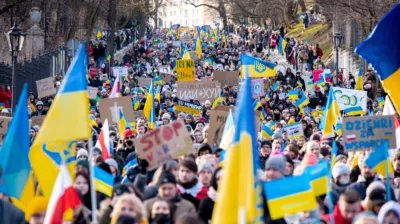

Published on October 23, 2023, by the Institute for Human Sciences (IWM), this essay offers a comprehensive analysis of the ongoing Russo-Ukrainian War and its broader regional consequences. Two years on, the essay remains strikingly relevant as it anticipated structural dilemmas that now define Ukraine’s battlefield and diplomatic realities in 2025. Jarábik examines the war's origins and argues that the West's understanding of these events remains oversimplified. Break Point shifted focus from a binary “victory or defeat” lens to the long-term consequences of a frozen conflict.
Published by Carnegie’s Russia Eurasia Center on July 15, 2025, this memo follows Balázs Jarábik’s working visit to Chișinău ahead of Moldova’s critical 2025 September parliamentary elections. The analysis highlights rising stakes and growing risks of (self-)deception as Moldova approaches this pivotal vote. While the country’s European Union trajectory is unlikely to reverse, its pace will hinge less on Chișinău’s reform efforts and more on Brussels’ readiness to deepen enlargement. In an increasingly securitized regional environment, the greater threat is not backsliding on reforms but the escalation of domestic tensions triggered by a mishandled electoral process—an opening Russia is well-positioned to exploit.
In his June 18, 2025 analysis for the Carnegie Endowment’s Russia Eurasia Center, Jarábik argues that the European Union must recalibrate its approach to Belarus. He contends that continuing to treat Belarus merely as a moral cause risks rendering the EU irrelevant in a region where leverage, not sentiment, will determine outcomes.Jarábik emphasizes that while Belarus's EU trajectory is unlikely to reverse, its pace will depend more on Brussels' willingness to enlarge than on Minsk's capacity to reform. He warns that in today's securitized regional climate, the real danger lies not in backsliding but in the potential escalation of domestic tensions if the electoral process is mishandled—a vulnerability Russia is well-positioned to exploit.