Objective analysis demands nuance — and in the age of online echo chambers, dissenting opinions are more important than ever???
Let’s talk!Essential Ukraine is a bi-monthly publication of Minority Report hosted by R.Politik, offering in-depth analysis of Ukraine's internal political landscape, institutions, and societal transformations. Authored by Balázs Jarábik, a seasoned observer of Ukrainian politics, the publication provides grounded insights tailored for policymakers, diplomats, and analysts.Unlike other services, Essential Ukraine prioritizes depth and realism over frequency, focusing on the structural and societal changes influenced by the ongoing conflict.
In the latest 6th edition, Jarabik delves into the complexities of Ukraine's defense strategy amidst escalating pressures.The report highlights the challenges posed by Russia's evolving tactics and the strain on Ukraine's military resources. The analysis underscores the critical need for strategic recalibration and sustained international support to navigate the shifting dynamics of the conflict.

Ukraine may survive another winter of Russian attacks. But what will that survival cost—and what kind of country will remain? In his second essay for Europe’s Futures, Balázs Jarábik shifts the focus from Ukraine’s remarkable resilience to the accumulating human, economic and political costs of prolonged war.
Russia’s expanding infrastructure campaign threatens far more than electricity supplies. Repeated attacks on heating, transport, industry and logistics undermine everyday life and Ukraine’s long-term economic viability. Jarábik argues that Europe risks mistaking Ukraine’s capacity to endure for an unlimited ability to sustain resistance. Demographic depletion, disrupted education, displacement and growing dependence on external assistance cannot be repaired through resilience alone.
The essay also examines what a permanent eastern frontier means for Europe itself. The EU must prepare for a prolonged confrontation with Russia without making continued Ukrainian warfare its only strategy. That requires sustainable defence commitments, integration and reconstruction adapted to Ukraine’s changing realities, and a credible European diplomatic approach. The central challenge is not simply to help Ukraine survive, but to preserve the people, communities and economic foundations on which its European future depends.
Ukraine may be able to hold the front while losing the economic capacity to sustain its resistance. In this analysis for Carnegie Politika, Balázs Jarábik examines how Russia’s expanding infrastructure campaign is targeting not only Ukraine’s energy system, but also its industrial production, logistics, transport networks and tax base. The numbers reveal the scale of the challenge. Ukraine’s draft 2027 budget allocates nearly 44% of GDP to security and defense, while its deficit is projected at 15% of GDP. The EU will need to mobilize at least €70 billion in additional funding for 2027 alone as Russian strikes threaten the economic assumptions underlying Kyiv’s budget. This creates a difficult political dilemma. Ukraine needs more European assistance, but Brussels is demanding anti-corruption safeguards and fiscal reforms that could constrain Zelensky’s centralized political system. Europe must balance the risks of weakening reform conditionality against those of withholding essential financing. The strategic challenge is to preserve the functioning economy and state that make continued resistance possible.
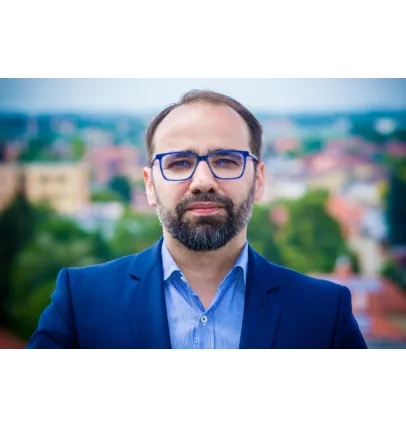
Minority Report was founded by Balázs Jarábik, a leading contributor for over twenty years to international development programs in Central and Eastern Europe. A recognized authority in CEE affairs, Jarábik has combined hands-on fieldwork — including managing numerous international development programs in Central and Eastern Europe as well as in Central Asia — with rigorous scholarly analysis. Jarábik’s writings have appeared in a variety of media outlets, including Bloomberg, CNN, The Economist, The Financial Times, Foreign Affairs, Foreign Policy, The Guardian, Politico, The Moscow Times, The Wall Street Journal, and The Washington Post.

The Minority team has the experience and networks necessary for advising on public affairs and public policy in Eastern and Central Europe. It leverages deep regional understanding, thematic expertise, proven research methodologies, and field-based insights.